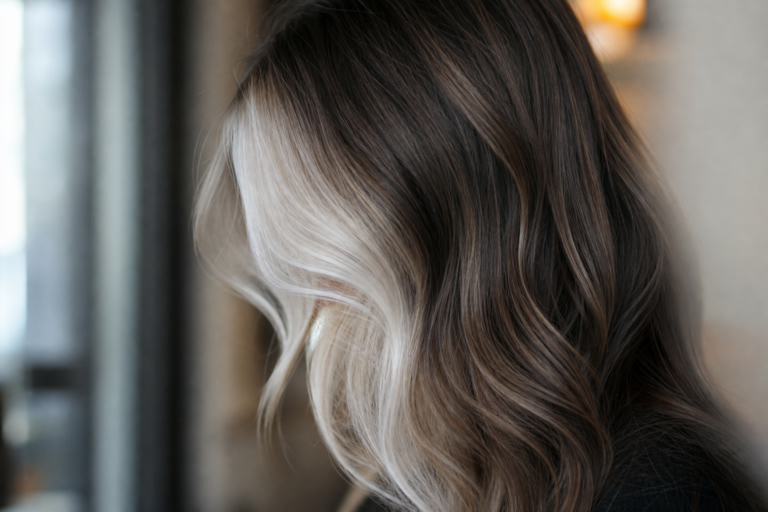
There’s a technique request I heard hundreds of times. A client would sit down, pull out her phone, and show a photo. Different clients, different photos — but the same thing: bright color framing the face, everything else darker behind it. The front pieces lit up. The face looked lifted. The whole look said intentional.
That request never slowed down. In 2026, it’s only gotten louder. The money piece highlight — those face-framing sections at the front of the part, typically lifted 2–4 levels lighter than the rest — is the single most-requested salon color service of the year. Behind the Chair, Wella, and Refinery29 all confirm it. Your clients are bringing in the same photos mine did, just on newer phones.
The technique is deceptively simple. Done right, it frames the face like nothing else. Done carelessly, it can look harsh, stripy, or blown out. The difference almost always comes down to one thing: precision during processing.
Why Money Pieces Demand Real-Time Visibility
Face-framing pieces aren’t forgiving. They sit exactly where every client, stylist, and onlooker can see the result. The sections are typically finer than full-head highlights — often just 1–3 subsections per side — which means you’re working with less hair mass and less thermal buffer. They lift faster. They can go brassy faster. And if you over-process, you can’t hide it under a curtain of darker hair the way you might with a scattered balayage.
Traditional foil compounds this problem. You place the foil, fold it, and then you’re flying blind. To check lift, you have to crack the foil — which disrupts the heat environment, risks smearing color onto adjacent hair, and costs you time. On a service where timing windows can be 10–15 minutes, that’s not acceptable.
The professional solution is simple: use something transparent. When I developed ColorShells with my brother Al, one of the first problems we set out to solve was exactly this. The shells are clear. You watch color develop in real time. You see the lift happening. You know — precisely — when you’ve hit the target.
Money Piece Placement: The Technique That Makes the Difference
The placement decision is where money pieces succeed or fail before the color is even mixed. These are the principles I’ve seen work consistently across hundreds of color services:
Work from the part, not the hairline
The most natural-looking money pieces start at or near the part and flow forward with the hair’s natural fall. Hairline-first placement can look like an afterthought. Starting from the part grounds the color in the hair’s architecture.
Section thickness matters as much as color level
Thicker sections create a bolder, more editorial statement. Finer sections — sometimes called a “soft money piece” — read as natural dimension and are almost impossible to detect at the root line as they grow in. Know what the client actually wants before you commit to the thickness.
Taper the application toward the ends
Apply color fully saturated from mid-shaft, then feather your brush through the ends. This mimics how natural hair lightens from sun exposure — heavier at the ends, softer as it reaches the root. A blunt application top-to-bottom looks manufactured, not lived-in.
Isolate the sections completely
The worst money piece errors come from color drift — product migrating from the face-framing sections onto the hair directly behind them. Clean isolation is non-negotiable. This is where ColorShells’ snap-on design earns its place: the rear alignment guides seat each shell securely, and the edge creates a physical barrier between the colored section and the rest of the hair.
What Clients Are Actually Requesting in 2026
The “money piece” request comes in several flavors this year:
The Classic Money Piece: Strong contrast, clearly intentional, often on darker hair with platinum or warm blonde face framing. High-drama, high maintenance.
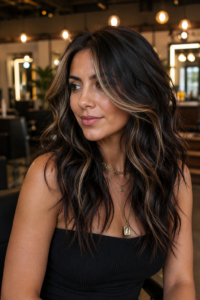
The Soft Money Piece: Subtle brightness at the front, barely detectable against the rest of the color. Works beautifully on warm brunettes and natural blondes. Low maintenance and extremely wearable — very popular in 2026 as clients shift toward effortful-looking, easy-to-live-with color.
The Blended Money Piece: Face-framing highlights that connect seamlessly into balayage or full-head color. No hard line where the face-framing ends and the rest begins. This requires the most technical precision — and the most visibility during processing.
The trend data for spring-summer 2026 shows a clear lean toward the soft and blended variations. Clients want dimension that looks like it could be natural. They’re moving away from obviously highlighted hair toward obviously healthy hair.
The Tools That Make It Easier
Any service that requires precision and timing benefits from tools that give you more information, not less. Real-time lift monitoring — seeing color develop through a transparent shell rather than guessing behind opaque foil — is the single most practical upgrade available to a colorist doing money pieces.
ColorShells were designed for this. The clear shell gives you unobstructed visibility at every stage. The snap-on seat keeps the section isolated. The internal product grid holds saturation evenly, preventing the hot-spot lifting that creates uneven brassiness on fine, face-framing sections.
For money piece work, the Small shells work best for fine-sectioned soft money pieces; the Large shells for thicker classic or blended placement. On most clients you’ll use two shells per service — one per side.
Ready to add ColorShells to your color toolkit? See the full product line at colorshells.com/shop/.
A Note on Tone Correction
Money pieces are almost always lifted to pale yellow or white before a toner is applied. The toner gives you the final shade — champagne, platinum, buttery cream, or bright white. Toner timing is as critical as lift timing, and clear visibility during both stages matters.
Watch the underlying pigment through the shell during lift. Watch the toner deposit during toning. You’ll never open a foil mid-service and find a surprise again.
Have you tried ColorShells for your money piece work? Drop a comment below — I’d love to hear whether the real-time visibility made a difference, and what shade your clients are requesting most this season.