Every week, clients are showing up with their phones out. They flip the screen toward you and say, “I want this.” And what they’re pointing to almost always has one thing in common: it shines like glass.
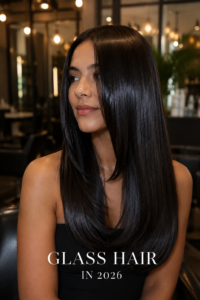
Glass hair isn’t a gimmick. It’s not a filter effect. It’s a real result that comes from precise color execution combined with the right finishing products — and in 2026, it’s become the defining look of the season. The “healthy luxury” aesthetic has taken over the summer salon conversation. Clients want color that looks expensive, luminous, and alive. Not chunky. Not flat. Not foil-crisp.
After twenty-plus years behind the chair, I’ve watched trends come and go. Glass hair is the one I’ve been waiting for, because it rewards the professionals who know how to control the lift. And that’s exactly where most stylists are leaving results on the table.
What Glass Hair Actually Means at the Professional Level
The consumer version of “glass hair” focuses on the finish — sleek, shiny, mirror-like. But for professional colorists, achieving that result starts much earlier in the service. True glass hair requires:
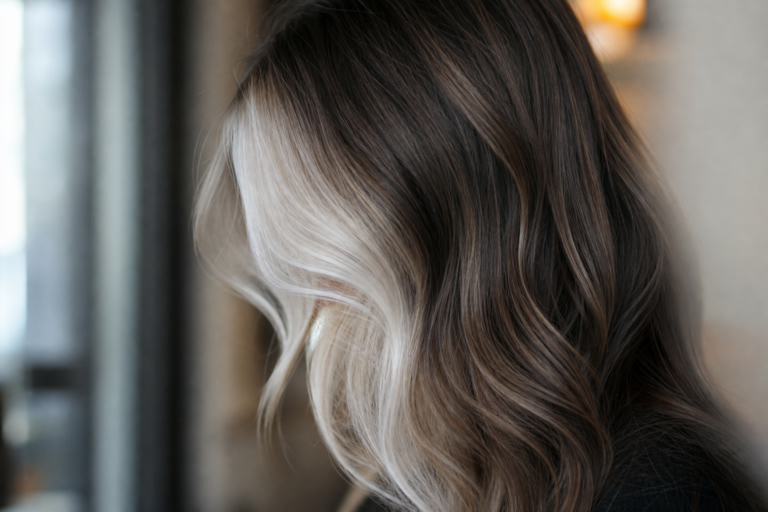
- Ultra-fine sectioning — thick chunks of highlight break the illusion. You need near-invisible threads of color that blend seamlessly with the base.
- Controlled lift timing — gloss effects live in a narrow window. Too little lift and the toner sits dull. Too much and you blow past the target level and lose the warmth that makes glass hair look rich rather than washed out.
- Toner precision — the gloss treatment is applied after lift, often a demi-permanent formula. The whole service depends on reading what you pulled during processing.
- Seamless blending — partial highlights and balayage sections need to melt into the base, not sit on top of it.
The technique demands that you know exactly what’s happening to the hair while it’s processing. And that used to be a problem.
The Foil Problem Nobody Talks About
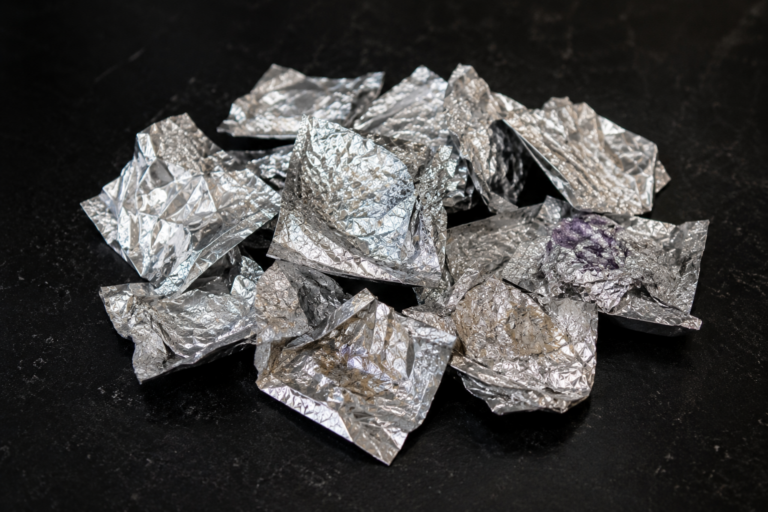
Standard foil is opaque. You fold it, you wait, and you hope. If you’re doing a full head of fine babylight sections for a glass effect, you’re managing 50 to 80 individual packets — and every one of them is a guess. You crack a few to check, disturb the lift, and try to extrapolate the rest.
Glass hair is unforgiving of inconsistency. One packet that processes five minutes longer than the others shows up in the finished result. The client whose phone showed a perfectly uniform mirror-sheen will notice.
This is why I built ColorShells around transparency. When every section is visible during processing, you stop guessing. You watch the lift progress in real time across the entire head. You can walk the floor, come back, and know in a single glance exactly where every section is in the lift cycle. That’s not a luxury feature — for a technique like glass hair, it’s the difference between a consistent result and a patchwork one.
How to Execute Glass Hair from the Chair
Here’s the framework I’d use for a full glass hair transformation in 2026:
Consultation first. Glass hair reads differently depending on the base. A level 4 brunette wanting full glass results is a multi-session service. Be honest about that. Partial glass — face-framing sections with a gloss treatment — can be a single appointment result that builds toward the full look.
Section fine, place precise. Use a pin comb or tail comb for sectioning. The sections should be thin enough that they’d be almost invisible if left uncolored. Fold the hair cleanly before product application — trap the hair under the thumb to keep the section flat and consistent.
Watch the lift. This is not the service to leave the client under a dryer and disappear. Glass hair requires you to monitor the lift throughout. With transparent shells, you can see every section simultaneously. With foil, you’re opening and closing, disturbing the lift, and working in the dark.
Remove in the window, not on a timer. Don’t pull to a clock. Pull to the hair. When you can see the lift has reached the right level — and when you can see it in every section, not just the ones you’ve opened — that’s when you move.
Gloss at the sink. Choose a demi-permanent toner that complements the lifted base. For the classic glass effect: cool neutrals on blonde, warm veil tones on brunette. Apply to damp hair, process under heat if needed, and rinse when the color looks uniform. The gloss is what turns a good highlight into a glass result — don’t rush it.
The Trend Behind the Trend
What’s driving glass hair in 2026 is actually a broader client shift. People are tired of high-maintenance, obviously-colored hair. They want results that look expensive and effortless. Pantone’s Color of the Year for 2026 is Cloud Dancer — an airy, luminous white that’s pulled the whole premium color conversation toward light, sheen, and natural movement.
That’s good news for salon professionals who lead with education and precision. Glass hair is not a box-dye result. It cannot be replicated at home with a kit from a drugstore. It takes controlled technique, the right professional products, and — yes — the right tools.
If your clients are bringing in glass hair photos and you haven’t been able to deliver the result consistently, this is worth adding to your skill set. The demand is only growing.
Ready to Make the Switch?
ColorShells were built for exactly this kind of work — precision technique, real-time visibility, no guessing. Whether you’re executing fine babylights for a glass effect or monitoring a balayage melt, seeing the lift happen is a professional advantage that compounds with every service.
Are you already executing glass hair results for your clients? What’s been the hardest part to nail — the lift, the toner, or the sectioning? Drop it in the comments — I want to know what’s working on your floor.